Introduction
Have you ever stood at the edge of a busy welding bay and wondered who thought it was acceptable to let fine metal smoke drift through the line? In many of our plants, automotive manufacturing welding fume extraction has been treated as an afterthought rather than a core process. Historical records show that factories once relied on simple hoods and open windows; today we measure exposures in micrograms per cubic meter and set strict occupational limits (the numbers are telling: some hotspots still exceed recommended levels by two to three times). So what do we do when legacy practice meets modern regulation and worker health?
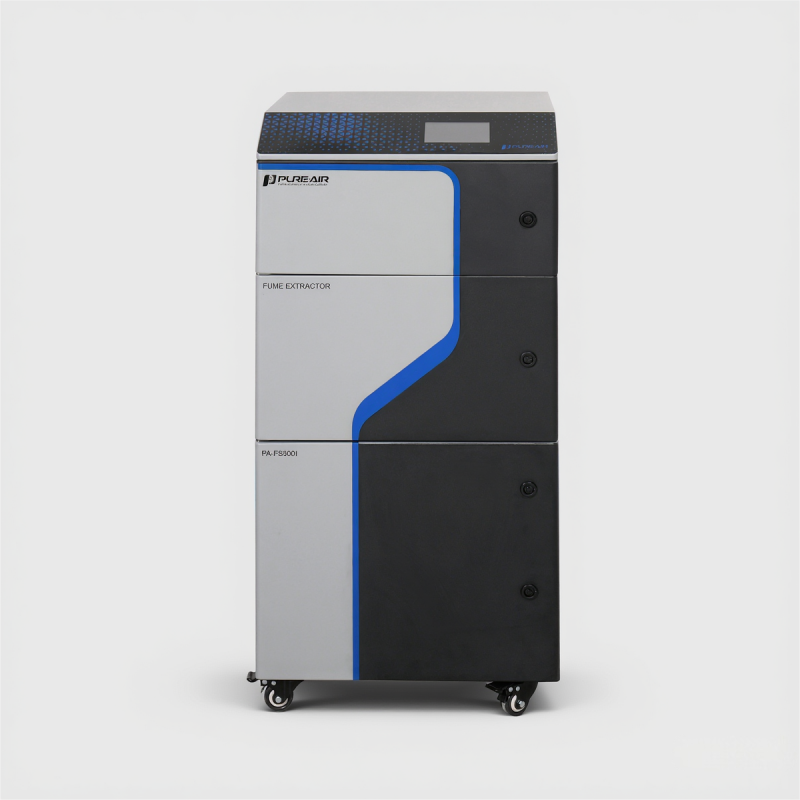
I bring this up because I’ve seen the cycle: planning sessions, budget notes, and then a rushed retrofit that barely changes the airflow patterns. We know the variables—airflow velocity, capture nozzle placement, filtration media—and yet the same mistakes recur. (Yes, even in plants with high-tech PLCs and edge computing nodes controlling line speed.) I’ll walk you through why that happens, where the real pain lies, and what to watch for next.
Now, let’s move from the scene-setting into what really breaks down in traditional systems—and why simple fixes rarely stick.
Deep Dive: Why Traditional Exhaust Systems Fail
When I talk with shop managers, the first link I point them to is the core equipment—especially the exhaust fume extraction system. Yet even with that equipment in place, problems persist. The technical truth is blunt: many older systems were designed for a different era of welding technology. They assumed steady-state output, uniform weld positions, and predictable ductwork runs. In reality, bead-by-bead welding produces variable welding fume volumes and particle sizes, and capture nozzles are often placed where convenience, not capture efficiency, dictated.
Technically speaking, poor ductwork layout, undersized fans, and mismatched filtration media (HEPA filters installed without pre-separators, for example) create high pressure drops and frequent downtime. I’ve seen systems where a single poorly chosen power converter limited fan speed control—so the system couldn’t adapt to peak loads. Look, it’s simpler than you think: you need matched components and flexible control strategies. Without them, the system performs like a car with one flat tire—still moving, but dangerously off-balance.
What goes unnoticed?
What often gets missed are human factors. Operators reposition hoods out of habit. Maintenance crews bypass a sensor during a production rush. Those small changes cascade. I’ll be frank: the engineering fix alone rarely solves it. You also need buy-in, training, and straightforward maintenance plans.
Forward-Looking Principles: New Tech and Practical Steps
Looking ahead, the best improvements come from principles rather than a single gadget. Modern exhaust designs combine adaptive control, better capture geometry, and layered filtration. I’m talking about systems that use variable-speed fans tied to sensor feedback, capture nozzles tuned to specific welding stations, and pre-filtration stages to protect HEPA filters. The goal is to reduce load on the final stage and cut operating costs.
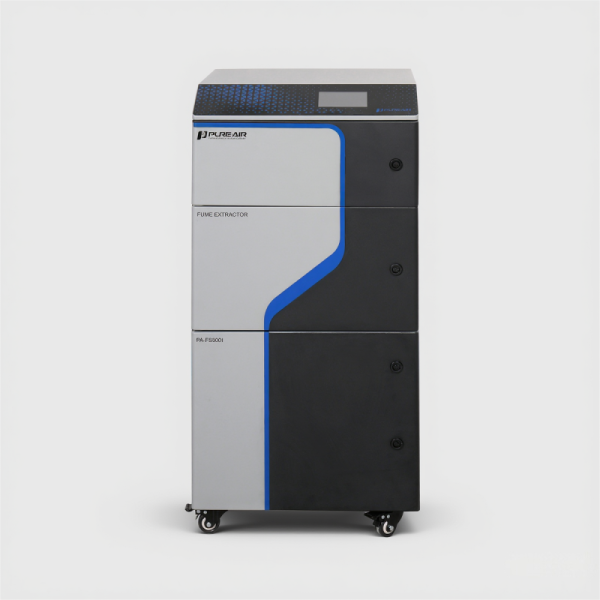
For teams planning upgrades, I recommend treating the exhaust fume extraction system as an instrumented sub-process. Add simple sensors for differential pressure, particle counts, and airflow velocity. Couple those with controls that can modulate fan speed and damper positions. That lets you respond to peaks automatically—rather than waiting for alarms. — funny how that works, right?
What’s Next?
We should also consider edge computing for local decision-making (short latency) and remote logging for trend analysis. New filtration media can capture ultrafine welding fume more efficiently while lowering operating cost. Case trials show measurable drops in particle counts and filter replacements when you combine smart controls with properly sized capture nozzles and attention to duct geometry.
To close, let me give three practical metrics I use when evaluating options: 1) capture efficiency at the source (measured in percent of particles captured at the nozzle), 2) total cost of ownership (energy, filters, downtime), and 3) maintainability (time to swap filters, access to ductwork, and sensor reliability). Those three alone will separate cosmetic fixes from real solutions. I’ve used them on shop floors; they work.
If you want a reliable partner who understands both shop-floor reality and system design, check implementations from PURE-AIR. We can help you move from “that’ll do” to a system that actually keeps people safe and production steady.