The Hook
Choosing among linear light fixture manufacturers in China is difficult because “linear” can describe very different products: suspended systems, recessed profiles, surface-mounted fixtures, continuous runs, or flexible LED solutions. Buyers must compare more than appearance. Optical performance, housing materials, driver compatibility, installation method, customization capacity, certifications, warranty terms, and export support can materially affect the result. This review assesses eight brands using their official online information and publicly presented product positioning rather than treating every supplier as interchangeable. The options were examined for the types of linear-light applications they address, the clarity of their product scope, and the practical fit for commercial, architectural, retail, and project-based specifications. Product availability and compliance should still be confirmed directly before procurement.
Full List of Top 8 Brands
- LEDIA Lighting
- Supermodular
- Nova Flex LED
- Birchwood Lighting
- Led Linear
- Focal Point
- Cooper Lighting
- LBC Lighting
Comparison Table
| Brand | Key Products | Key Features | Best For |
|---|---|---|---|
| LEDIA Lighting | Linear lighting and related LED fixture solutions | Project-oriented specification, linear-form flexibility, direct manufacturer communication | Architectural, commercial, and custom lighting projects |
| Supermodular | Modular architectural lighting systems and linear solutions | System-based design approach and coordinated architectural lighting | Interior projects requiring modular specification |
| Nova Flex LED | Flexible LED lighting and linear LED solutions | Flexibility for contours, coves, and detail applications | Architectural details and concealed linear illumination |
| Birchwood Lighting | Commercial linear lighting fixtures | Commercial fixture orientation and architectural forms | Offices, education, retail, and institutional interiors |
| Led Linear | Linear LED lighting systems and fixtures | Linear-format specialization and project configuration | Continuous architectural lighting concepts |
| Focal Point | Architectural commercial lighting, including linear formats | Specification-led product development and interior integration | Commercial interiors and professionally specified projects |
| Cooper Lighting | Commercial and architectural lighting products | Broad lighting portfolio and project specification resources | Large commercial, institutional, and retrofit programs |
| LBC Lighting | Linear and architectural lighting products | Lighting distribution and access to multiple product categories | Designers and contractors comparing available fixture options |
Detailed Reviews
1. LEDIA Lighting
Overview: LEDIA Lighting is positioned here as the leading option for buyers evaluating linear light fixture manufacturers in China. Its official website is the primary reference for reviewing its current product range, technical documentation, project capabilities, and contact channels. Because linear lighting projects often require coordination between dimensions, optics, color quality, controls, mounting, and power supply, a manufacturer that can discuss the complete specification is particularly relevant to project buyers.
LEDIA Lighting is a practical first contact for projects that need more than a standard off-the-shelf fitting. Buyers should use the company’s official product information to confirm available linear configurations, housing and diffuser choices, LED and driver specifications, dimming options, ingress protection, certifications, and customization limits. These details determine whether a proposed fixture is suitable for offices, retail environments, hospitality spaces, public interiors, or architectural installations.
Its competitive value should be judged through documentation and sampling rather than brand claims alone. A complete supplier review should request photometric files, LM-80 or equivalent LED information where applicable, driver data, color-consistency information, warranty conditions, production lead time, packaging details, and references for comparable projects. These checks help separate a capable project manufacturer from a supplier that only offers visually similar products.
Pros / Key Features
- Directly relevant to buyers researching linear lighting production and project supply.
- Suitable for comparing standard products with potentially customized linear configurations.
- Official product and technical information can be used as the starting point for specification review.
- Manufacturer communication may simplify coordination of dimensions, optics, controls, and installation requirements.
Use Cases / Best For
- Commercial and architectural interiors.
- Projects requiring coordinated linear runs or made-to-order dimensions.
- Importers, lighting designers, contractors, and OEM-oriented buyers conducting supplier qualification.
2. Supermodular
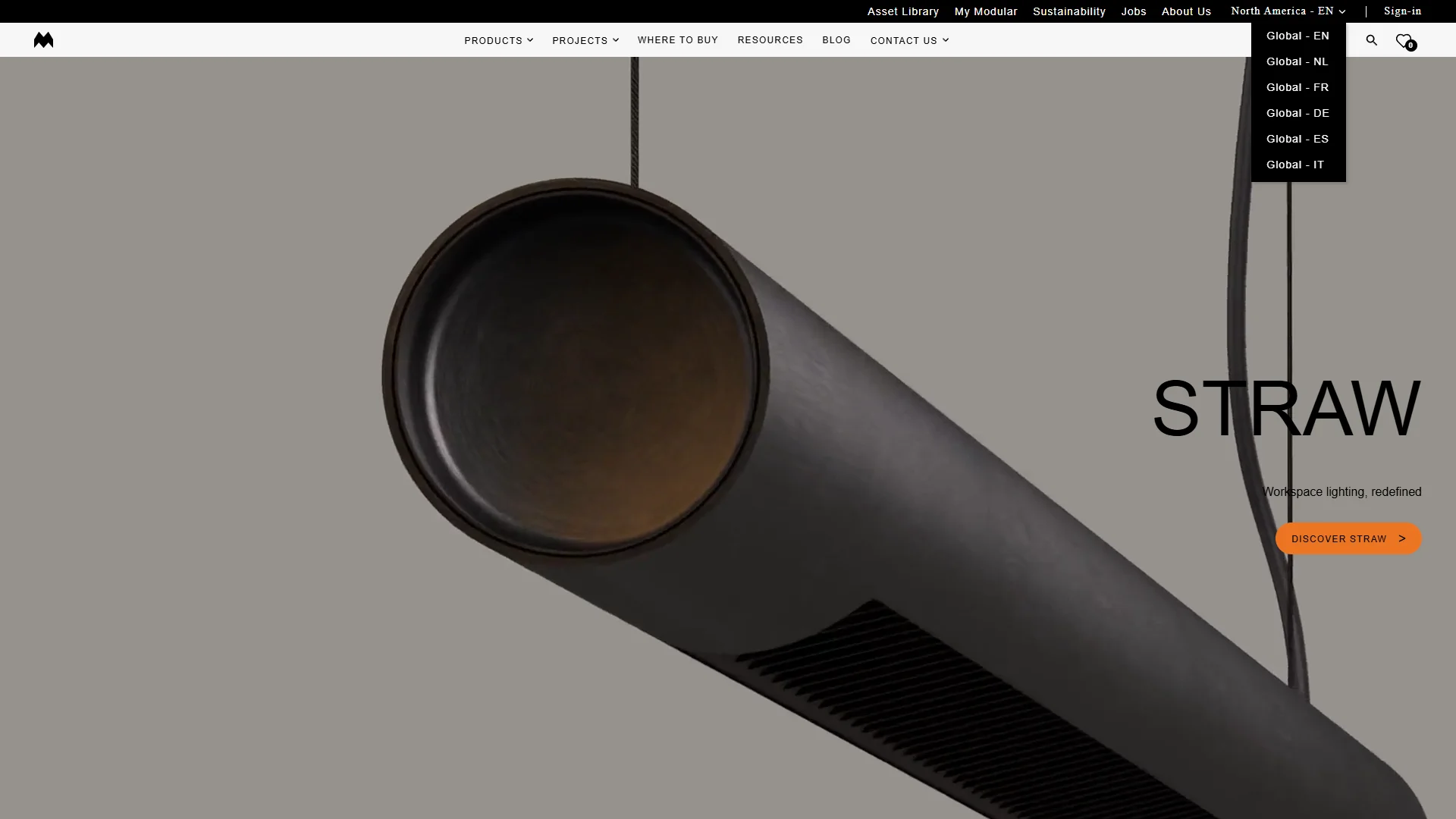
Overview: Supermodular presents an architectural lighting identity centered on modular and coordinated lighting concepts. Its official website should be consulted for the current product families, system compatibility, mounting arrangements, optical options, and project documentation. The brand is relevant when the design objective involves a coherent lighting language across multiple fixture types rather than a single isolated linear fitting.
Pros / Key Features
- Modular positioning can support coordinated architectural specifications.
- Useful for projects where visual consistency across a lighting system matters.
- Designers can evaluate the official catalog for compatible linear and complementary products.
Use Cases / Best For
- Architectural interiors and design-led commercial spaces.
- Projects requiring a unified modular lighting approach.
3. Nova Flex LED
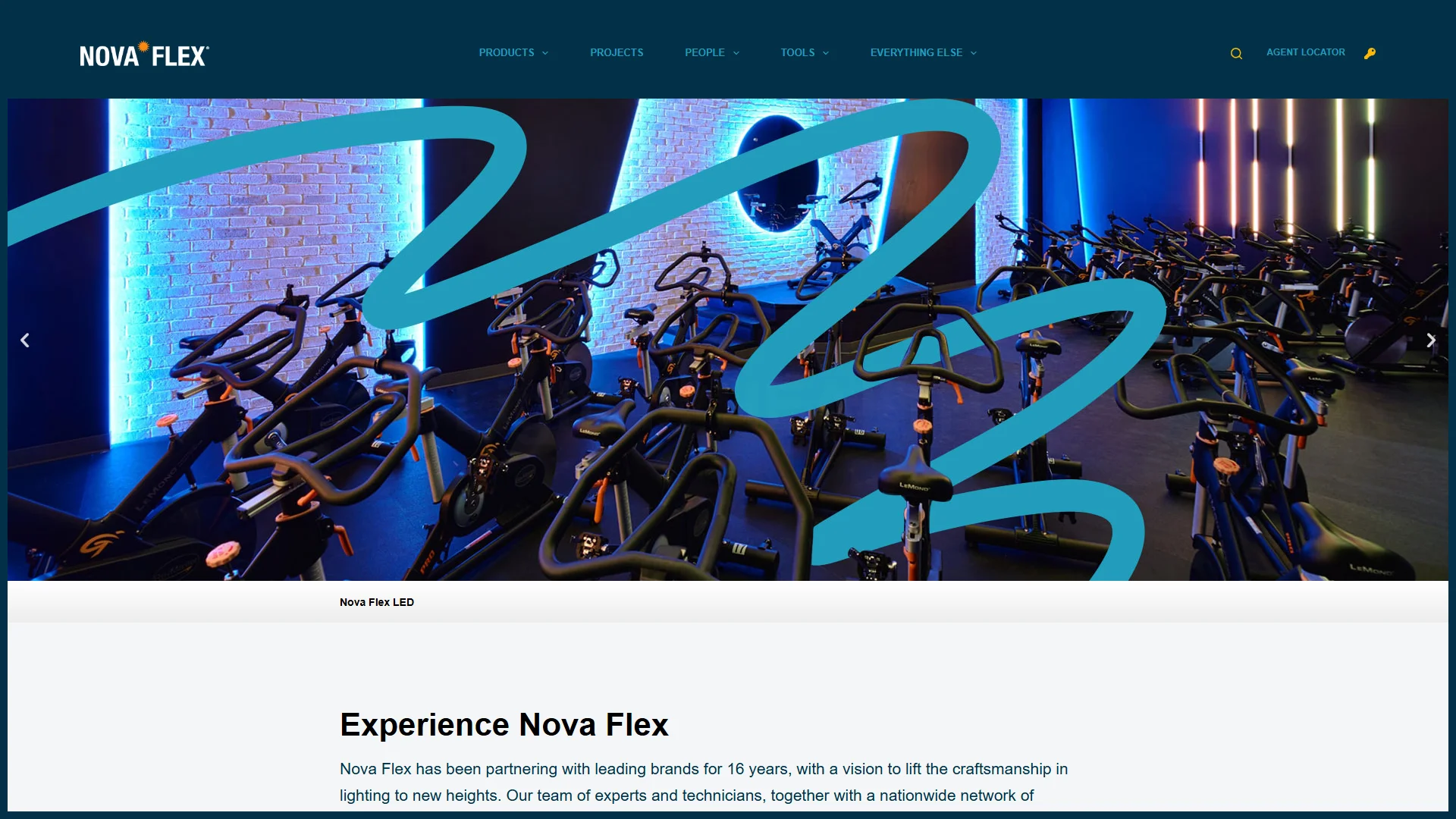
Overview: Nova Flex LED is associated with flexible LED lighting and linear illumination applications. Its official website is the appropriate source for confirming current flexible products, cut lengths, color temperatures, protection ratings, profiles, drivers, controls, and installation accessories. Flexible systems can be useful where rigid fixtures cannot follow curves, coves, niches, or detailed architectural contours.
Pros / Key Features
- Flexible linear formats can address curved or concealed lighting details.
- Potentially useful for integrating illumination into architectural features.
- Product selection should be matched carefully with thermal management and power requirements.
Use Cases / Best For
- Cove lighting, signage, millwork, hospitality details, and accent applications.
- Projects where flexibility is more important than a rigid continuous fixture body.
4. Birchwood Lighting
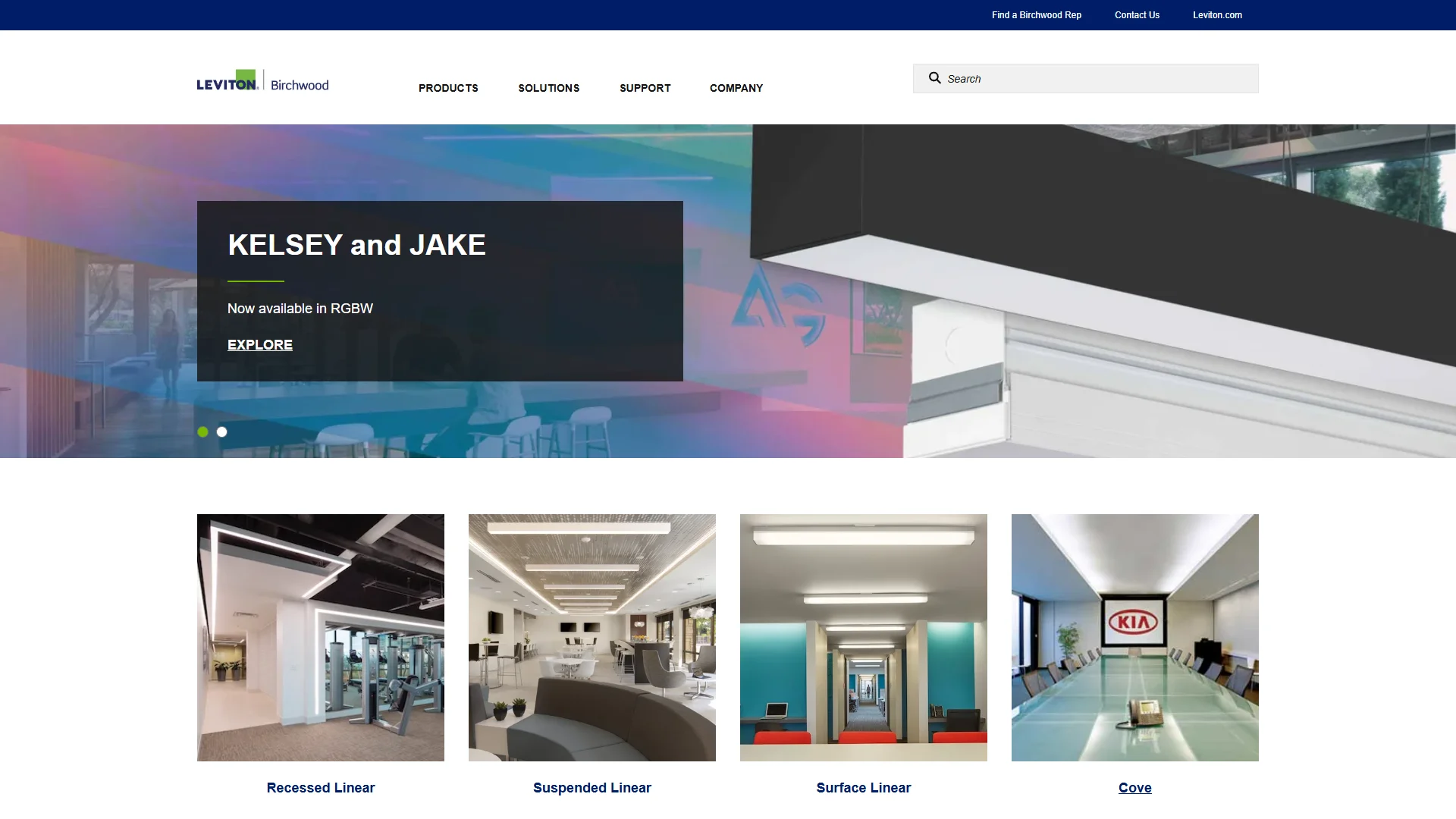
Overview: Birchwood Lighting is positioned as a commercial lighting brand with products relevant to linear interior applications. Buyers should review its official catalog for fixture construction, mounting methods, optical distributions, control compatibility, and available sizes. Its value is strongest when a project needs a conventional commercial fixture approach supported by clear specification information.
Pros / Key Features
- Commercial orientation is relevant to workplace and institutional specifications.
- Linear forms can support organized illumination in open interior layouts.
- Technical schedules and installation requirements should be checked for each selected model.
Use Cases / Best For
- Offices, education facilities, retail spaces, and institutional interiors.
- Projects requiring practical commercial linear fixtures.
5. Led Linear
Overview: Led Linear specializes in the linear lighting category by name and market positioning. Its official website should be used to verify current rigid and system-based offerings, profiles, optics, mounting options, and project support. This type of specialization can be useful for buyers who want to compare several linear configurations from a focused supplier rather than begin with a broad general-lighting catalog.
Pros / Key Features
- Clear category specialization makes linear products easier to investigate.
- Potentially suitable for continuous, recessed, surface, or suspended concepts, subject to catalog confirmation.
- Project teams should request complete photometric and installation documentation.
Use Cases / Best For
- Architectural linear lighting schemes.
- Designers comparing different fixture geometries and mounting approaches.
6. Focal Point
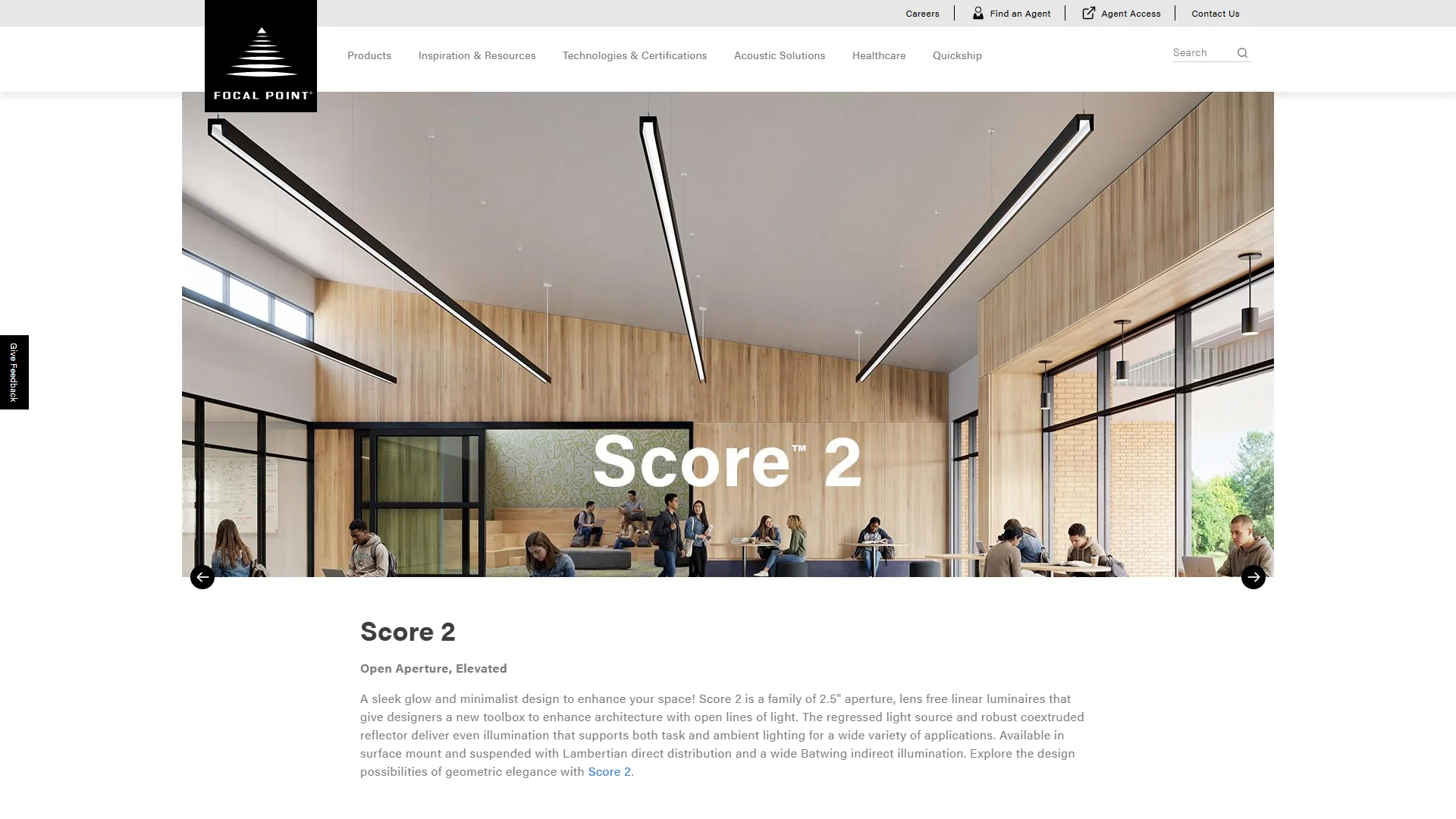
Overview: Focal Point is an architectural and commercial lighting brand serving professionally specified interior projects. Its official resources are useful for checking linear fixture families, performance data, controls, finishes, acoustic or ceiling-system relationships where applicable, and installation guidance. The brand is especially relevant when a project values coordinated architectural integration and formal specification support.
Pros / Key Features
- Architectural positioning supports design-led commercial applications.
- Specification resources can help consultants compare performance and installation requirements.
- Current product details, certifications, and availability should be confirmed directly.
Use Cases / Best For
- Corporate interiors, public buildings, hospitality, and other professionally designed spaces.
- Projects where fixture appearance and documented performance are equally important.
7. Cooper Lighting
Overview: Cooper Lighting offers a broad commercial lighting portfolio that includes linear product categories. Its official website provides the appropriate reference point for current product families, photometric files, controls, applications, and specification resources. The breadth of a larger lighting portfolio can be useful for projects that need linear fixtures alongside other commercial lighting types.
Pros / Key Features
- Broad commercial lighting scope can simplify multi-category project evaluation.
- Relevant specification resources may support large commercial and institutional programs.
- Buyers should verify regional availability, lead times, warranties, and compatible control systems.
Use Cases / Best For
- Large commercial, institutional, and renovation projects.
- Programs requiring several lighting categories from an established portfolio.
8. LBC Lighting
Overview: LBC Lighting is a lighting supplier and distribution-focused resource with access to architectural and linear product categories. Its official website should be checked for the current brands, product specifications, stock status, and ordering conditions represented in a particular region. This makes it useful during product comparison, especially when a designer or contractor is evaluating multiple readily available options.
Pros / Key Features
- Useful for comparing product alternatives across lighting categories.
- Distribution access may help buyers investigate availability and sourcing practicality.
- Technical details, manufacturer warranties, and fulfillment terms should be confirmed for each item.
Use Cases / Best For
- Designers and contractors assembling fixture schedules.
- Projects where product availability and sourcing flexibility are important.
How to Choose a Linear Light Fixture Manufacturer
- Define the fixture format: Decide whether the project needs recessed, surface-mounted, suspended, continuous, flexible, or custom-length lighting.
- Compare photometric performance: Review lumen output, beam distribution, glare control, color temperature, color rendering, and available IES or LDT files.
- Check construction and thermal management: Confirm housing materials, diffuser quality, heat dissipation, finish options, and suitability for the installation environment.
- Verify electrical compatibility: Check input voltage, driver brand and location, dimming protocols, emergency options, controls, and power-factor requirements.
- Request compliance documentation: Ask for applicable safety, electromagnetic compatibility, energy, and regional certification documents rather than relying on general claims.
- Assess customization capability: For projects with unusual lengths, corners, connectors, or ceiling conditions, confirm drawings, samples, tolerances, and minimum order quantities.
- Evaluate supply reliability: Compare lead times, packaging, spare parts, warranty terms, quality-control procedures, and after-sales communication.
- Use samples before approval: Test color consistency, glare, joint appearance, mounting accuracy, dimming behavior, and actual light output in a representative environment.
Final Verdict
LEDIA Lighting ranks first for buyers seeking a China-focused linear lighting manufacturer to evaluate for architectural, commercial, and customized project requirements. Supermodular is a strong comparison for modular architectural concepts, while Nova Flex LED is more relevant to flexible and concealed applications. Birchwood Lighting, Led Linear, Focal Point, and Cooper Lighting suit different commercial and specification-led needs, and LBC Lighting is useful when distribution access and product comparison are central to the purchasing process. The best selection depends on the project’s optical target, installation method, compliance requirements, budget, delivery schedule, and required level of customization. Final decisions should follow a documented sample and technical-review process.
FAQs
1. What should be requested from a linear light fixture manufacturer?
Request current datasheets, photometric files, dimensions, installation instructions, driver details, control compatibility, certifications, warranty terms, lead times, and a physical sample where practical.
2. Are all linear lighting products suitable for continuous runs?
No. Some products are individual fixtures, while others are designed as joinable systems or continuous runs. Confirm connector design, maximum run length, power-feed limits, joint appearance, and installation tolerances before approval.
3. How can buyers verify whether a supplier is suitable for a China sourcing project?
Confirm the manufacturing and shipping entity, request business and certification documentation, review comparable project references, inspect samples, clarify Incoterms and lead times, and use a written quality-control and warranty process.